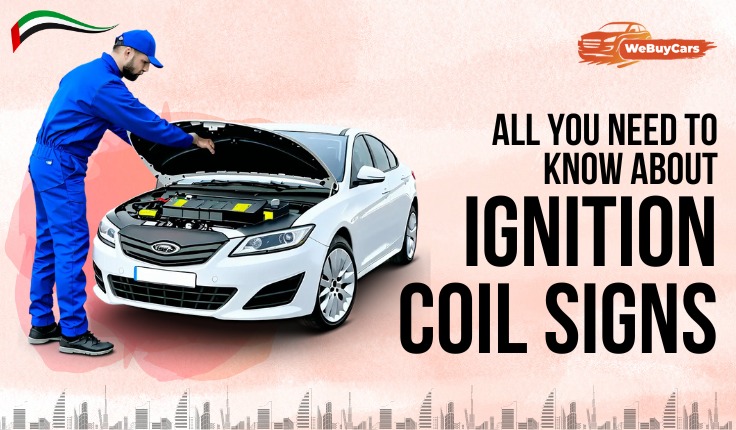
The ignition coil is one of the most important parts of the vehicle beginning system. It is frequently referred to as an induction coil or spark coil. Furthermore, all contemporary spark ignition engines have it. Its main function is to provide the engine with high voltage so that the combustion process proceeds as intended.
All the information you need to know about ignition coils, including how they operate, what kinds there are, and what happens if one is damaged read at WeBuyCars.ae.
Functioning Ignition Coil
The primary ignition coil converts the low voltage of the battery into the high voltage needed to ignite the plugs. The combustion process is started when this spark ignites the air-fuel mixture in the engine's cylinders.
A transistor or other switching mechanism inside the ignition coil is activated when the engine's control module sends a signal. A magnetic field is created around the primary winding as a result of this activity.
The control module opens the circuit, stopping the current flow, which causes the magnetic field to collapse. Through electromagnetic induction, this abrupt change causes the secondary winding to experience a high voltage.
Via cables or wires, the high voltage produced by the ignition coils is transmitted to the spark plugs. A high-voltage pulse is delivered to each spark plug at the exact moment to ignite the air-fuel mixture in the matching cylinder.
Ignition Coil Windings
The primary winding and the secondary winding are the two windings that normally make up an ignition coil. The battery that is receiving the low-voltage electrical current is linked to the primary winding. The high voltage required for the spark is produced by the secondary winding, which is connected to the spark plugs.
Ignition Coil Types
The changing requirements of automotive engines and ignition systems are satisfied by a variety of ignition coil types. Let us examine the features of the subsequent categories:
Classical
The primary circuit of this kind of automobile ignition coil is powered by the battery. There's a magnetic field produced. After that, the electrical circuit is broken. An electric current flows through the secondary winding as a result of the force created by the collapse.
After that, the distributor cap allows the current to reach the spark plugs. Despite having a straightforward design, it cannot sustain the spark timing.
Electronic
The conventional and electronic car ignition coils are quite similar. Instead of using a distributor cam and points, they transfer signals to the control module via a pickup coil.
Solid-state switches need the distributor shaft to receive signals, even though they are more dependable. After 150,000 to 200,000 miles, these shafts halt, and the gear wear interferes with the ignition timing.
Distributor Less
The distributor-less ignition system's (DIS) architecture enables more energy to come from more coils. Additionally, the crankshaft position sensor is used by the ignition coils in this system to determine spark timing based on position and angles, and a magnetic triggering device is used to monitor engine speed.
The position sensors on the crankshaft and camshaft track the angles and communicate that data to the computer. The vehicle may be started by the spark in the engine thanks to this auto computer.
Plug-in coil
The coil-on-plug (COP) ignition technique gained popularity as ignition technology advanced. Each spark plug in this arrangement has its ignition coil placed right on top of it. With COP systems, every spark plug has independent control, enabling precise timing of ignition and doing away with the need for distributors. This design provides increased dependability, decreased energy loss, and higher performance.
Symptoms of a Bad Ignition Coil
A vehicle's malfunctioning ignition coil might result in several symptoms. The symptoms of a faulty ignition coil are as follows:
Mechanical Misfires
The worn-out ignition coils are one of the reasons behind engine misfires. When the ignition coil is unable to provide the spark required to ignite the fuel mixture in one or more cylinders, misfires happen.
Ruggy Idle
An engine that idles rough can be a sign of a faulty ignition coil. When the car is at a stop, you could notice that the engine rattles or shakes more than usual. Furthermore, because the worn-out ignition coil alters the spark timing, it could make the car jerk while it is in the idle position.
Trouble Getting Started
It becomes difficult to start the engine if one or more ignition coils go out. Before the engine finally starts, you might have to crank it for a while or make several attempts. Moreover, it could be the cause of an automobile starting but not continuing to operate.
Issues with the ignition coil may result in inefficient engine combustion, which lowers fuel economy. In case the fuel efficiency of your car has considerably decreased, it can be the result of malfunctioning ignition coils.
Engine Instalment
In extreme circumstances, a faulty ignition coil may cause the engine to stall while you're driving. It may be risky, particularly if it occurs in congested areas or at fast speeds.
The check engine light on the dashboard will come on when the engine determines there is a problem with the ignition coils. When a failure in the engine or emissions system is discovered, the light alerts the driver.
Cost of Replacing an Ignition Coil
You can have the ignition coils replaced if they malfunction. You may be spent more replacing an ignition coil.
That concludes the information on the ignition coils. When making a purchase of a used car in the United Arab Emirates, you should have the vehicle inspected and all of its components checked.